What are biofuels?
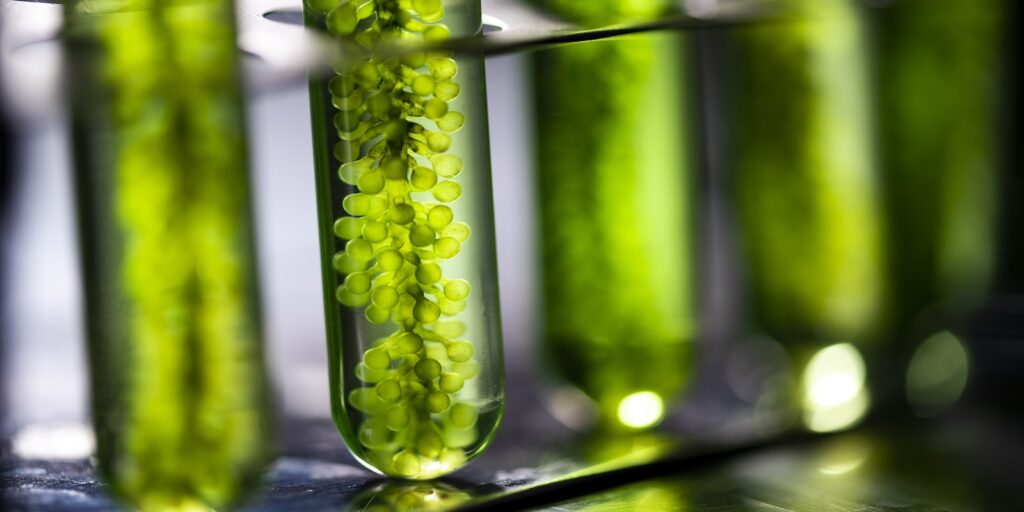
Biofuels are liquid and gaseous fuels made from renewable biological sources such as plants, waste oils, agricultural residues and organic waste, rather than from crude oil.
Because their carbon comes from material that recently absorbed CO2 from the atmosphere or was recovered from waste streams, biofuels can sharply reduce net emissions while using much of the engine, storage and bunkering infrastructure the world already relies on. That combination makes them one of the most practical tools for cutting carbon in shipping, transport and power generation today.
The main types of biofuels
From drop-in diesels to clean bio alcohols, each fuel suits different engines, routes and supply chains.
Hydrotreated Vegetable Oil
HVO
A renewable diesel made by treating vegetable oils and fats with hydrogen. It is a true drop-in fuel, chemically close to fossil diesel, and runs in existing engines with no modification.
Biodiesel
FAME
Fatty Acid Methyl Ester produced from vegetable oils, animal fats or used cooking oil. Widely blended with diesel from B5 to B100, it is the most established biofuel in road and marine use.
Ethanol and Methanol
Bio-alcohols
Alcohols fermented or synthesised from biomass. Bioethanol is blended into petrol worldwide, while bio-methanol is emerging as a clean marine fuel with a simple, well understood supply chain.
Biomethane
Biogas
Methane captured from the breakdown of organic waste, then upgraded to pipeline quality. It powers gas engines and can replace natural gas in transport and power generation.
Sustainable Aviation Fuel
SAF
Renewable jet fuel made from waste oils, residues or synthetic pathways. It cuts lifecycle emissions by up to 80 percent while meeting the strict specifications aviation demands.
Performance and Stability
Additives
Specialised chemistries that protect biofuel blends, improving oxidation stability, cold flow, lubricity and storage life so that fuels perform reliably across long voyages and supply chains.
Why biofuels matter for shipping and transport
Hard to electrify sectors need fuels that cut carbon now, without waiting for entirely new fleets and infrastructure.
Drop-in compatibility
Many biofuels work in engines, tanks and bunkering infrastructure that already exist, so operators decarbonise the assets they own instead of replacing them.
Lower lifecycle carbon
Because the carbon released was recently absorbed by plants or recovered from waste, well sourced biofuels can cut lifecycle CO2 by 50 to 90 percent versus fossil fuels.
Available today
Unlike fuels that need entirely new value chains, sustainable biofuels are produced and traded at scale now, giving shipping and transport an immediate path to lower emissions.
Energy security
Feedstocks from waste, residues and local crops reduce dependence on imported fossil fuels and strengthen the resilience of regional energy supply.
Quality is everything
A biofuel only delivers on its promise if the blend is right. Get it wrong and operators face instability, deposits, corrosion and lost performance at sea.
Biofuels behave differently from fossil fuels. They can be more prone to oxidation, absorb water, react with certain metals and seals, and change in cold conditions or long storage. Every blend must meet recognised specifications such as ISO 8217 for marine fuels and EN 14214 for biodiesel before it can be trusted in service.
This is why rigorous testing and optimisation sit at the heart of any serious move to biofuels. Knowing exactly how a fuel will ignite, burn, store and age is what turns a promising sample into a fuel an operator can rely on, voyage after voyage.
3Y Energy Biofuel Solutions
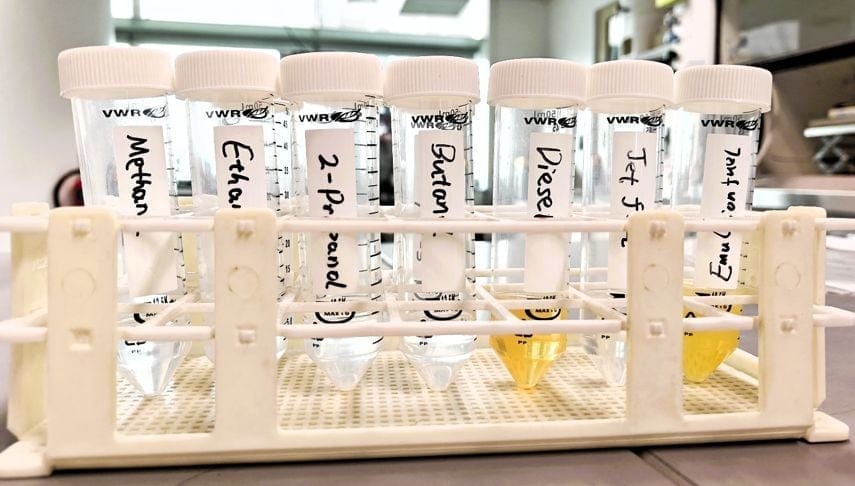
We provide advanced testing facilities for the evaluation and optimisation of biofuels and their blends, handling fuels such as HVO, FAME, alcohols, biogas and additives.
As a deep-tech spin-off from Cambridge CARES and the National University of Singapore, 3Y Energy turns research-grade combustion science into practical services that help fuel producers and operators bring biofuels to market with confidence. We help our partners understand exactly how a fuel performs, then optimise the blend so it meets specification, protects the engine and delivers the emissions reductions it promises.
What we offer
End to end characterisation and optimisation, grounded in over a decade of combustion and fuel research.
Blend evaluation and optimisation
We characterise biofuels and their blends across the full range, from low blends to neat fuels, and identify the formulations that deliver the best balance of performance and emissions.
Fuel stability and compatibility
Oxidation stability, water content, microbial risk and material compatibility are assessed so blends stay reliable through long storage and demanding marine conditions.
Combustion performance
Drawing on combustion science from Cambridge CARES and NUS, we measure how a fuel ignites and burns, then tune it for efficiency and clean operation.
Engine compatibility
We validate biofuels against real engine requirements and operating profiles, supporting safe adoption without compromising reliability or warranty limits.
Proven in the field
Our work is validated in real operations, on land and at sea.
On land, 3Y Energy provides biofuel testing services to world-leading sustainable fuel producers such as Neste, as well as to biofuel producers across Singapore and neighbouring countries. At sea, we have taken part in on-board sea trials with B50 blends, helping validate higher biofuel ratios in genuine marine conditions.
Through this work we are helping cement Singapore, the world’s largest bunkering hub, as a global centre for green-fuel innovation, and developing technology that accelerates the transition to cleaner, safer and more resilient fuels.
Bringing a biofuel to market?
Talk to our team about testing, optimisation and getting your blend ready for service.
Contact us